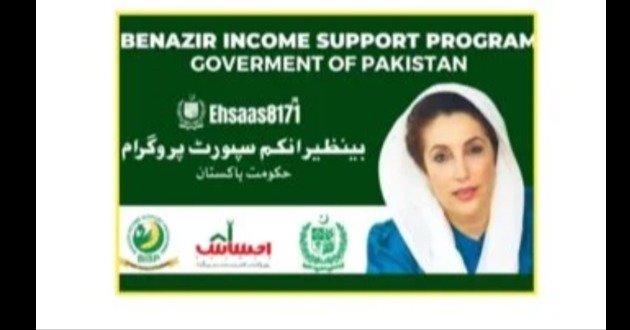
The Benazir Income Support Programme, commonly known as BISP, is one of Pakistan’s major social protection programmes. The Government of Pakistan launched BISP in July 2008 to provide financial support to vulnerable and low income households. The programme initially focused on helping families manage the effects of rising food prices and economic difficulties. It also established women as the primary recipients of cash assistance, supporting both household welfare and women’s financial empowerment. (Benazir Income Support Programme)
Over the years, BISP has expanded beyond its original cash transfer structure. It now operates several programmes designed to support household income, education, nutrition, health, and skills development.
BISP uses socioeconomic information to identify deserving households. Its National Socio Economic Registry, commonly called NSER, plays an important role in determining household eligibility for major programmes such as Benazir Kafaalat.
The programme operates across Pakistan through regional, divisional, and tehsil offices. The official BISP structure currently includes six regional offices, 33 divisional offices, and hundreds of tehsil offices. (Benazir Income Support Programme)
This complete guide explains BISP, its major programmes, eligibility, registration, payments, education support, nutrition assistance, digital payment developments, benefits, and common questions.
What Is BISP?
BISP stands for Benazir Income Support Programme.
It is a government social protection programme created to provide financial assistance to vulnerable households in Pakistan.
The programme was launched in July 2008. Its immediate purpose was to help poor households deal with economic shocks, inflation, and rising prices. Its longer term objectives include reducing extreme and chronic poverty and supporting women’s empowerment. (Benazir Income Support Programme)
BISP was established through an Act of Parliament.
The programme operates nationwide.
Its assistance primarily reaches women from eligible households. This approach allows financial support to reach families while also strengthening women’s role in household financial decisions.
BISP’s selection process is designed around socioeconomic conditions rather than political affiliation, geographical location, or other personal characteristics. (Benazir Income Support Programme)
History Of Benazir Income Support Programme
BISP began during a period of serious economic pressure.
In 2008, Pakistan experienced significant increases in food prices and broader economic difficulties. Poor households were particularly vulnerable because they had fewer resources to absorb increases in the cost of basic necessities.
The government introduced BISP as a national safety net.
The initial programme focused on unconditional cash transfers.
The idea was straightforward. Eligible families would receive financial assistance that could help them manage essential household expenses.
Over time, BISP developed into a broader social protection system.
Its programmes now include cash assistance, education stipends, nutrition support, and skills development initiatives.
Main Objectives Of BISP
BISP has several major objectives.
Reducing Poverty
The programme aims to provide financial assistance to low income and vulnerable households.
Regular support can help families manage essential expenses and reduce the effects of economic shocks.
Supporting Vulnerable Families
BISP targets households that meet the relevant socioeconomic criteria.
The programme focuses on families facing financial difficulties and limited economic resources.
Women’s Empowerment
Women play a central role in BISP’s cash transfer system.
The programme provides support primarily through women, helping increase their control over household financial assistance. (Benazir Income Support Programme)
Improving Household Welfare
Financial support can help families meet basic needs and manage difficult economic periods.
Supporting Education
Benazir Taleemi Wazaif provides conditional education stipends for eligible children of active BISP families.
Improving Child Nutrition
Benazir Nashonuma focuses on pregnant women and young children and combines financial support with health and nutrition services.
Developing Skills
The Benazir Hunarmand Programme provides eligible BISP beneficiaries with opportunities for skills development.
Benazir Kafaalat Programme
Benazir Kafaalat is the core unconditional cash transfer programme within BISP.
It was initiated in 2008 and has grown into one of Pakistan’s largest cash transfer initiatives.
The programme provides financial assistance to eligible households through women beneficiaries.
According to BISP information, the programme supports around 9 million families. The official BISP Kafaalat information currently lists a stipend of Rs. 8,500 per beneficiary per quarter. (Benazir Income Support Programme)
The amount and payment arrangements can change through government decisions, so beneficiaries should verify current payment information through official BISP channels.
How BISP Selects Beneficiaries
BISP does not simply provide cash assistance to everyone who applies.
Households are assessed through socioeconomic information.
Benazir Kafaalat uses the Proxy Means Test, commonly known as PMT, through the National Socio Economic Registry.
A household receives a PMT score based on socioeconomic characteristics.
The BISP Board determines the eligibility cutoff.
The official BISP information currently identifies a PMT cutoff of 32 for general eligibility under Kafaalat. It also identifies a cutoff of 37 for families with a differently abled person. (Benazir Income Support Programme)
Eligibility rules can change, so applicants should verify their current status through official channels.
What Is NSER?
NSER stands for National Socio Economic Registry.
It is an important database used for identifying households for social protection programmes.
BISP describes its registry as the result of a large national door to door socioeconomic survey.
The information collected through the registry helps determine household welfare.
The data also supports planning for poverty reduction and social protection programmes. (Benazir Income Support Programme)
For applicants, accurate household information is important.
If your family circumstances change, you may need to update your information through the appropriate BISP registration process.
Who Can Qualify For BISP?
Eligibility depends on the programme.
For Benazir Kafaalat, households are assessed using socioeconomic information and the applicable PMT threshold.
Generally, the programme focuses on poor and vulnerable households.
The household must meet the relevant eligibility criteria.
The beneficiary’s information must be verified.
The applicant must provide valid identification information.
Eligibility is not guaranteed simply because a person is unemployed or has a low income.
BISP uses its established assessment system to determine eligibility.
BISP Eligibility And PMT Score
The PMT score is an important part of Kafaalat eligibility.
The score is calculated using household socioeconomic information.
A lower score generally represents greater socioeconomic vulnerability.
BISP sets the applicable cutoff based on programme requirements and available resources.
The current official Kafaalat information lists 32 as the general PMT cutoff and 37 for households with a differently abled person. (Benazir Income Support Programme)
Because programme policies can change, you should check your current eligibility rather than relying on old social media posts.
Role Of CNIC In BISP
The Computerized National Identity Card, or CNIC, is essential for beneficiary identification.
BISP uses identity information for verification.
The CNIC helps connect beneficiary information with government databases and payment systems.
Keep your CNIC valid and updated.
If your CNIC has expired or contains incorrect information, resolve the issue through the relevant government authority.
Never give your CNIC information to an unknown person claiming to provide BISP payments.
BISP Registration
Registration is based on the BISP socioeconomic assessment process.
People who believe they may qualify should use official BISP registration facilities.
BISP has established registration centers through its tehsil office network.
Applicants should carry the required identification documents.
During the survey or registration process, provide accurate household information.
Do not provide false information to obtain benefits.
False information can create problems during verification.
Dynamic Registry
BISP has moved toward a dynamic approach to socioeconomic registration.
This allows household information to be updated as circumstances change.
Changes in household composition, income, disability status, or other socioeconomic factors can affect eligibility.
Keeping information updated helps ensure that BISP’s database reflects the actual situation of households.
BISP Tehsil Offices
BISP operates through a large network of tehsil offices.
These offices can help beneficiaries with registration, complaints, verification issues, and programme related information.
BISP’s official overview currently states that it has 385 tehsil offices across the country. (Benazir Income Support Programme)
If you face a problem with your registration or payment, visiting the relevant BISP office can be more reliable than asking an unofficial agent.
BISP Payment System
BISP payments are designed to reach eligible beneficiaries through approved payment mechanisms.
The Kafaalat programme has used biometric verification for disbursement.
According to BISP, Kafaalat payments have been distributed through partner banks, with HBL serving Punjab, Sindh, and Balochistan, while Bank Alfalah serves KP, GB, and AJK under the documented arrangement. (Benazir Income Support Programme)
Payment methods and banking arrangements can change.
Beneficiaries should follow the latest instructions issued through official BISP channels.
Biometric Verification
Biometric verification helps confirm the identity of beneficiaries during payment.
The system connects payment access with the beneficiary’s verified identity.
This can reduce the risk of unauthorized collection.
If biometric verification fails, the beneficiary should contact the relevant BISP office or authorized payment channel rather than paying an unofficial agent.
Digital Payment Developments
BISP is also moving toward more digital payment systems.
The programme has been developing Social Protection Wallets and digital payment arrangements.
In January 2026, BISP reported that Social Protection Wallets were being activated for more than 10 million women beneficiaries. It also reported that millions of free SIMs had been distributed as part of the digital payment initiative. (Benazir Income Support Programme)
This shift aims to improve transparency, security, and convenience.
The exact activation and payment process may differ by beneficiary and area.
Benazir Taleemi Wazaif
Benazir Taleemi Wazaif is an education support programme connected with BISP.
Its purpose is to encourage children from beneficiary families to attend school.
The programme covers children at different education levels.
The official BISP information identifies these age ranges:
Primary education, 4 to 12 years.
Secondary education, 8 to 18 years.
Higher secondary education, 13 to 22 years. (Benazir Income Support Programme)
The programme connects cash transfers with school enrollment and attendance requirements.
School Attendance Requirement
Education stipends are conditional.
A child must meet the programme’s attendance requirements.
BISP identifies a minimum attendance requirement of 70 percent per quarter.
If the child does not meet the required conditions, payments can be stopped. (Benazir Income Support Programme)
This structure encourages families to keep children enrolled in school and attending regularly.
Taleemi Wazaif Stipend
The official BISP information lists different stipend amounts based on education level and gender.
At the primary level, the listed quarterly amount is Rs. 1,500 for boys and Rs. 2,000 for girls.
At the secondary level, the listed quarterly amount is Rs. 2,500 for boys and Rs. 3,000 for girls.
At the higher secondary level, the listed quarterly amount is Rs. 3,500 for boys and Rs. 4,000 for girls. (Benazir Income Support Programme)
The programme also includes a one time graduation bonus of Rs. 3,000 for girls completing primary education under the documented programme structure. (Benazir Income Support Programme)
Benazir Nashonuma Programme
Benazir Nashonuma focuses on maternal and child nutrition.
The programme targets the first 1,000 days of a child’s life, beginning during pregnancy and continuing until the child reaches two years of age.
It combines cash assistance with health and nutrition interventions.
The programme works with the national health system and international partners including UNICEF, WFP, and WHO. (Benazir Income Support Programme)
Who Can Benefit From Nashonuma?
The official programme information identifies several eligible groups.
Pregnant women aged 18 to 59 who are already enrolled under Kafaalat.
Lactating women aged 18 to 59 who are enrolled under Kafaalat.
Children under two years of age belonging to Kafaalat beneficiary families.
The programme requires relevant documentation and health verification. (Benazir Income Support Programme)
Nashonuma Health Requirements
The programme encourages important health activities.
These include:
Antenatal care.
Postnatal care.
Routine immunization.
Growth monitoring.
Nutrition education.
Use of specialized nutritious food where provided.
The objective is to improve maternal and child health and nutrition during a critical period of development. (Benazir Income Support Programme)
Nashonuma Stipend
The documented Nashonuma structure lists quarterly payments for eligible participants.
The listed amount is Rs. 3,500 for a pregnant woman.
For children under two, the listed amount is Rs. 3,500 for boys and Rs. 4,000 for girls.
The programme connects these payments with health and nutrition compliance. (Benazir Income Support Programme)
Benazir Hunarmand Programme
BISP has also introduced the Benazir Hunarmand Programme.
The programme focuses on skills development for eligible BISP beneficiaries.
According to the programme’s official information, applicants must be registered in the BISP Dynamic Registry.
The minimum education requirement is Matric.
The age range is 18 to 40 years.
Only one person from each family can register.
Applicants can register through the programme’s registration system or visit a relevant BISP tehsil office with an original CNIC and active mobile number. (Hunarmand)
Why Skills Development Matters
Cash assistance can provide immediate support.
Skills development can help beneficiaries build longer term earning opportunities.
Training can help people develop abilities that may be useful for employment, freelancing, entrepreneurship, or other forms of income generation.
The Benazir Hunarmand Programme therefore adds a skills development component to BISP’s wider social protection approach.
Recent BISP Developments
BISP continues to expand and update its programmes.
Recent 2026 activities include work related to digital wallets, free SIM distribution, mobile registration services, nutrition programmes, and vocational training.
In July 2026, BISP reported activities involving mobile registration vans and awareness sessions about the Digital Wallet System and Benazir Mobile SIM distribution. (Benazir Income Support Programme)
BISP also reported a memorandum of understanding with PSDF to support vocational training for women and youth under the Benazir Hunarmand Programme. (Benazir Income Support Programme)
These developments show that the programme is moving beyond traditional cash distribution toward broader digital and human development support.
Benefits Of BISP
BISP provides several important benefits.
Financial Assistance
Eligible households receive cash support under relevant BISP programmes.
This can help families manage essential household expenses.
Support For Women
Women remain central to the Kafaalat cash transfer system.
This gives women a direct role in receiving programme assistance. (Benazir Income Support Programme)
Education Support
Taleemi Wazaif provides conditional support for eligible children.
Nutrition Support
Nashonuma provides assistance linked with maternal and child health and nutrition.
Skills Development
Hunarmand provides opportunities for skills training to eligible beneficiaries.
Nationwide Access
BISP operates throughout Pakistan through a large network of offices. (Benazir Income Support Programme)
How BISP Helps Families
The financial support provided through BISP can help eligible households manage economic pressure.
Families may use assistance for essential household needs.
Education stipends can support children’s continued education.
Nutrition programmes can encourage health visits and child growth monitoring.
Skills programmes can create opportunities for beneficiaries to develop employable abilities.
The combination of these programmes gives BISP a broader role in Pakistan’s social protection system.
BISP For Women
Women are central to the design of BISP.
The programme provides Kafaalat support through women beneficiaries.
This approach is connected to the programme’s objective of empowering women economically.
Women can become the direct recipients of household cash assistance when their families meet the applicable eligibility requirements.
BISP For Children
Children benefit through programmes such as Taleemi Wazaif and Nashonuma.
Taleemi Wazaif focuses on education.
Nashonuma focuses on early childhood health and nutrition.
These programmes use conditions to encourage behaviors such as school attendance, health checks, immunization, and growth monitoring.
BISP For Pregnant Women
Benazir Nashonuma provides support to eligible pregnant women who meet the programme conditions.
The programme encourages antenatal care and nutrition awareness.
The objective is to support mothers and children during the early stages of life.
BISP For Differently Abled Persons
BISP has special eligibility provisions for households with a differently abled person.
The official Kafaalat information identifies a PMT cutoff of 37 for families with a differently abled person, compared with the general cutoff of 32 in the cited programme structure. (Benazir Income Support Programme)
Applicants should provide valid documentation where required.
BISP And Transgender Beneficiaries
BISP has also created a policy for transgender inclusion in Kafaalat.
The official programme information states that transgender applicants need a CNIC from NADRA identifying their gender as transgender.
They must complete the required survey through a BISP registration center.
The programme information states that PMT restrictions are relaxed for transgender applicants who complete the required survey and pass verification. (Benazir Income Support Programme)
What Documents Are Usually Needed?
Documents vary according to the programme.
Commonly relevant documents can include:
CNIC.
Children’s B-Form or CRC.
Family Registration Certificate where required.
School admission documents for Taleemi Wazaif.
Immunization records for Nashonuma.
Pregnancy verification where required.
Always check the current requirements before visiting a BISP office.
How To Avoid BISP Fraud
Beneficiaries should remain careful about fraud.
Do not share your ATM PIN.
Do not share mobile banking passwords.
Do not provide verification codes to strangers.
Do not pay an unofficial person to guarantee BISP registration.
Do not trust messages promising guaranteed payments.
Do not install unknown applications claiming to provide BISP payments.
Do not provide your CNIC details to random social media accounts.
Use official BISP offices and authorized payment channels.
BISP provides an official helpline for beneficiary assistance. The current official website lists 0800-26477. (Benazir Income Support Programme)
Common BISP Problems
Beneficiaries may experience different issues.
These can include:
Payment delays.
Biometric verification problems.
Incorrect household information.
Expired CNIC.
Registration issues.
Missing children’s records.
School attendance problems.
Payment collection difficulties.
Digital wallet activation issues.
When a problem occurs, beneficiaries should contact the relevant BISP office or authorized support channel.
Avoid unofficial agents.
Why BISP Information Changes
Government programmes can change their payment amounts, eligibility criteria, registration procedures, payment systems, and programme coverage.
This means information found on an old social media post may no longer be accurate.
Beneficiaries should verify important information before taking action.
This is particularly important when checking payment amounts or registration requirements.
BISP And Digital Transformation
BISP is increasingly using digital systems.
Digital wallets, SIM distribution, biometric verification, and integrated databases are designed to make payments more secure and transparent.
The January 2026 BISP announcement about Social Protection Wallets described the initiative as part of a move toward cashless and more secure benefit disbursement. (Benazir Income Support Programme)
Digital systems can also reduce dependence on physical cash distribution.
BISP And Financial Inclusion
Digital payment systems can help beneficiaries gain easier access to formal financial services.
A beneficiary with an appropriate digital payment arrangement may be able to receive assistance more directly.
The transition requires beneficiaries to understand how their wallet, SIM, identity verification, and payment process work.
BISP’s current digital initiatives are intended to make this process more transparent and convenient.
BISP And Poverty Reduction
BISP’s broader objective is poverty reduction.
Cash transfers can provide immediate financial support.
Education programmes can help children remain connected to school.
Nutrition programmes can support early childhood development.
Skills programmes can help beneficiaries develop earning opportunities.
These different approaches address different aspects of household vulnerability.
Frequently Asked Questions
What Does BISP Stand For?
BISP stands for Benazir Income Support Programme.
When Was BISP Started?
The Government of Pakistan launched BISP in July 2008. (Benazir Income Support Programme)
What Is The Main Purpose Of BISP?
BISP aims to provide social protection and financial assistance to poor and vulnerable households while supporting poverty reduction and women’s empowerment.
Who Receives BISP Payments?
Eligible beneficiaries are selected according to the criteria of the relevant BISP programme. Kafaalat primarily provides cash assistance through women.
What Is Benazir Kafaalat?
Benazir Kafaalat is BISP’s core unconditional cash transfer programme for eligible households.
What Is The Current Kafaalat Payment?
The BISP Kafaalat information currently lists Rs. 8,500 per beneficiary per quarter. Payment amounts can change through government decisions, so beneficiaries should verify current information before collecting payments. (Benazir Income Support Programme)
What Is PMT In BISP?
PMT means Proxy Means Test. It is a socioeconomic scoring method used to assess household eligibility.
What Is The Current PMT Cutoff?
The official Kafaalat information currently lists 32 as the general cutoff and 37 for families with a differently abled person. (Benazir Income Support Programme)
What Is NSER?
NSER stands for National Socio Economic Registry. It contains socioeconomic information used to support social protection targeting.
Can Women Apply For BISP?
Women can become beneficiaries when their households meet the applicable programme criteria and their information is successfully verified.
What Is Benazir Taleemi Wazaif?
It is a BISP education support programme that provides conditional cash assistance for eligible children of active BISP families.
What Attendance Is Required For Taleemi Wazaif?
The programme requires at least 70 percent quarterly attendance for continued eligibility under its documented attendance condition. (Benazir Income Support Programme)
What Is Benazir Nashonuma?
It is a BISP programme focused on maternal and child health and nutrition during pregnancy and the child’s first two years.
Who Can Benefit From Nashonuma?
Eligible pregnant and lactating women enrolled in Kafaalat and children under two from Kafaalat beneficiary families can qualify under the programme’s conditions. (Benazir Income Support Programme)
What Is Benazir Hunarmand?
It is a BISP skills development programme for eligible beneficiaries registered in the BISP Dynamic Registry.
What Is The Age Limit For Benazir Hunarmand?
The programme’s official guide lists an age range of 18 to 40 years. (Hunarmand)
What Is The Education Requirement For Hunarmand?
The minimum education requirement listed by the programme is Matric. (Hunarmand)
Can More Than One Person From A Family Join Hunarmand?
The official programme guide states that only one person from each family can register. (Hunarmand)
What Is A BISP Tehsil Office?
It is a local BISP office that provides programme related services such as registration assistance, complaints, and beneficiary support.
Does BISP Operate Across Pakistan?
Yes. BISP has a nationwide presence and operates through regional, divisional, and tehsil offices. (Benazir Income Support Programme)
Does BISP Provide Education Stipends?
Yes. Benazir Taleemi Wazaif provides conditional education stipends for eligible children of active BISP beneficiary families. (Benazir Income Support Programme)
Does BISP Support Pregnant Women?
Yes. Benazir Nashonuma provides support to eligible pregnant and lactating women enrolled in Kafaalat under its programme conditions. (Benazir Income Support Programme)
Does BISP Provide Skills Training?
Yes. Benazir Hunarmand provides a skills development pathway for eligible BISP beneficiaries. (Hunarmand)
What Is The BISP Helpline?
The current BISP website lists 0800-26477 as its helpline. (Benazir Income Support Programme)
Can BISP Information Change?
Yes. Payment amounts, eligibility criteria, registration procedures, and payment systems can change. Always verify current information through BISP’s official channels.
Final Thoughts
The Benazir Income Support Programme is a major part of Pakistan’s social protection system. It began in 2008 as a national cash transfer programme and has expanded into several areas of social support.
Benazir Kafaalat provides cash assistance to eligible households.
Benazir Taleemi Wazaif supports children’s education.
Benazir Nashonuma focuses on maternal and child health and nutrition.
Benazir Hunarmand creates opportunities for skills development.
BISP is also moving toward digital payment systems through Social Protection Wallets and related initiatives.
For beneficiaries, accurate information is essential. Eligibility depends on the relevant programme rules and socioeconomic assessment. Payment amounts and procedures can change, so you should verify current details before taking action.
If you believe your household may qualify, use the official BISP registration and support channels. Keep your CNIC and family information accurate. Avoid unofficial agents and never share sensitive banking information with strangers.
BISP’s wider objective is to provide social protection while helping vulnerable households improve their economic and social conditions. Its combination of cash assistance, education, nutrition, and skills programmes makes it an important component of Pakistan’s national social protection framework.